
Geibel & Hotz GmbH
Booth number: 1245-13
www.geibelundhotz.de
About us
Since 1956, precision grinding machines and accessories have been manufactured at the Geibel & Hotz site in Homberg (Ohm), Germany. Today, more than 12,000 of our machines are in operation worldwide. Every machine is fully assembled, commissioned, and rigorously quality-tested at our headquarters to ensure the highest standards of reliability.
For the semiconductor industry, we specialize in a breakthrough Modular Grinding Concept for SiC Puck Production. Unlike conventional all-in-one systems, our modular approach eliminates single points of failure, ensuring continuous production, higher flexibility, and maximum uptime.
Apart from our specialized solutions for SiC puck production, our range of external cylindrical grinders allow for precise and efficient machining of other monocristalline ingots of greater length. The optionally available automation seamlessly integrate the grinding process into your production enviroment.
Through our centrally coordinated service and a global network of authorized partners, we provide expert support and dependable service wherever you operate.
Address
Frankfurter Straße 102–104
35315 Homberg (Ohm)
Germany
E-mail: info@geibelundhotz.de
Phone: +49 6633 1810
Internet: www.geibelundhotz.de
Contact person:
B.Sc. Felipe Levin
CEO and Shareholder
Products & Services
To meet the rigorous demands of the semiconductor industry, we provide highly specialized grinding technologies for advanced crystal processing.
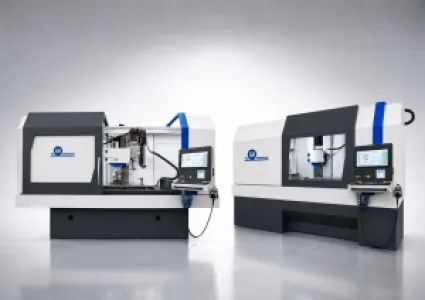
For advanced SiC boule production, we offer a breakthrough Modular Grinding Concept that separates key processing steps into dedicated standalone machines. By breaking the process chain, we eliminate single points of failure, vastly simplifying maintenance and maximizing equipment uptime.
Furthermore, for the highly precise machining of long monocrystalline ingots, we offer an advanced External Cylindrical Grinder featuring sensitive, force-controlled clamping. This system ensures maximum OD form accuracy while reliably preventing micro-cracks and structural damage in brittle materials.
Modular Grinding Concept for SiC Puck Production
GH SEED DOME GRINDER
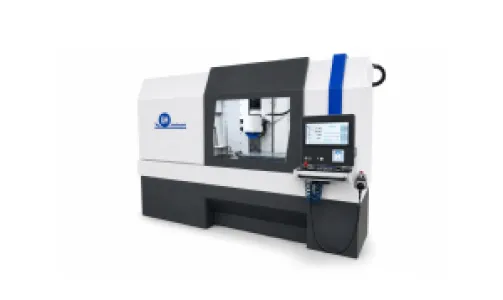
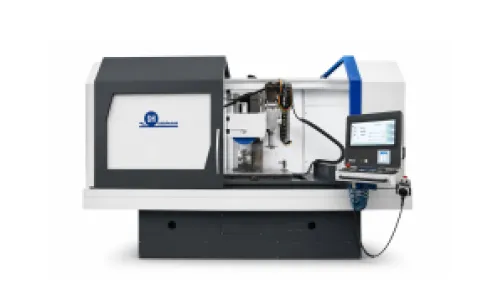
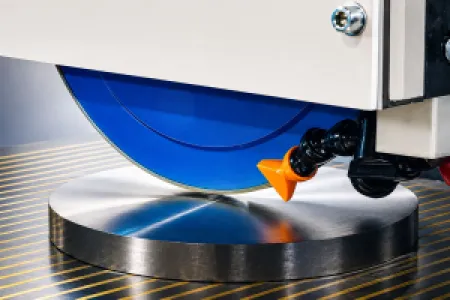
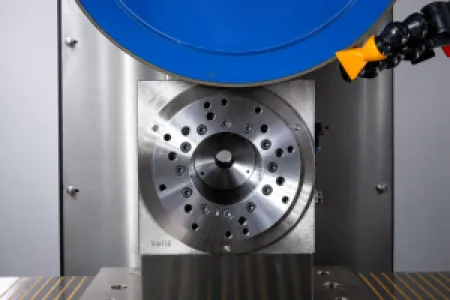
The GH SEED DOME GRINDER is used to grind the flat surfaces of the boule. The surfaces can be ground precisely in alignment with the crystal lattice structure – without any angled clamping of the workpiece. This reduces setup time, increases accuracy, and ensures maximum process stability.
GH OD NOTCH GRINDER
The GH OD NOTCH GRINDER is used to precisely grind the diameter of the boules. The exact position of the reference surface is determined based on the measurement results. Depending on customer requirements, either a notch or a flat is applied there. This creates a reliable reference surface for the subsequent process steps in wafer production.
Smart CNC Control Software (Standard on Both Machines)
Both the GH SEED DOME GRINDER and the GH OD NOTCH GRINDER operate on our future-proof, unified CNC platform, featuring a proprietary control software developed entirely in-house by Geibel & Hotz. Specifically engineered to optimize SiC processing workflows, it enables the automatic transfer of external workpiece measurement data directly into precise process parameters. For manual adjustments, no complex G-Code programming is required; instead, parameters are entered quickly and safely via an intuitive, dialog-guided user interface.
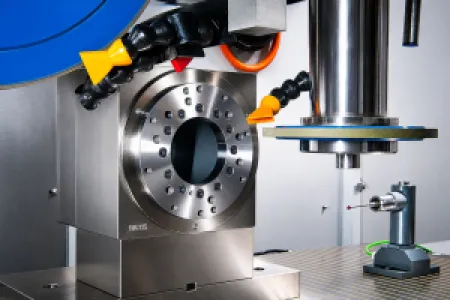
RS 1000 CU CNC – External Cylindrical Grinder for Monocrystalline Ingots
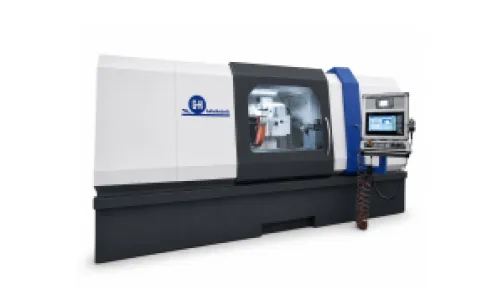
The RS 1000 CU CNC is a high-precision external cylindrical grinding machine specifically optimized for processing the outer diameter (OD) of monocrystalline ingots. Engineered for brittle semiconductor materials, the system features a hydraulic tailstock with infinitely variable, force-controlled clamping. This innovative technology ensures a highly sensitive clamping process, preventing micro-cracks and structural damage to the delicate crystal lattice.
Equipped with an intuitive, dialog-guided user interface, the machine eliminates the need for complex G-code programming. Process data can be transferred automatically, guaranteeing reproducible geometries and maximum material yield. Tailor-made automation options, such as robotic loading, are available to seamlessly integrate the system into high-throughput semiconductor manufacturing lines.